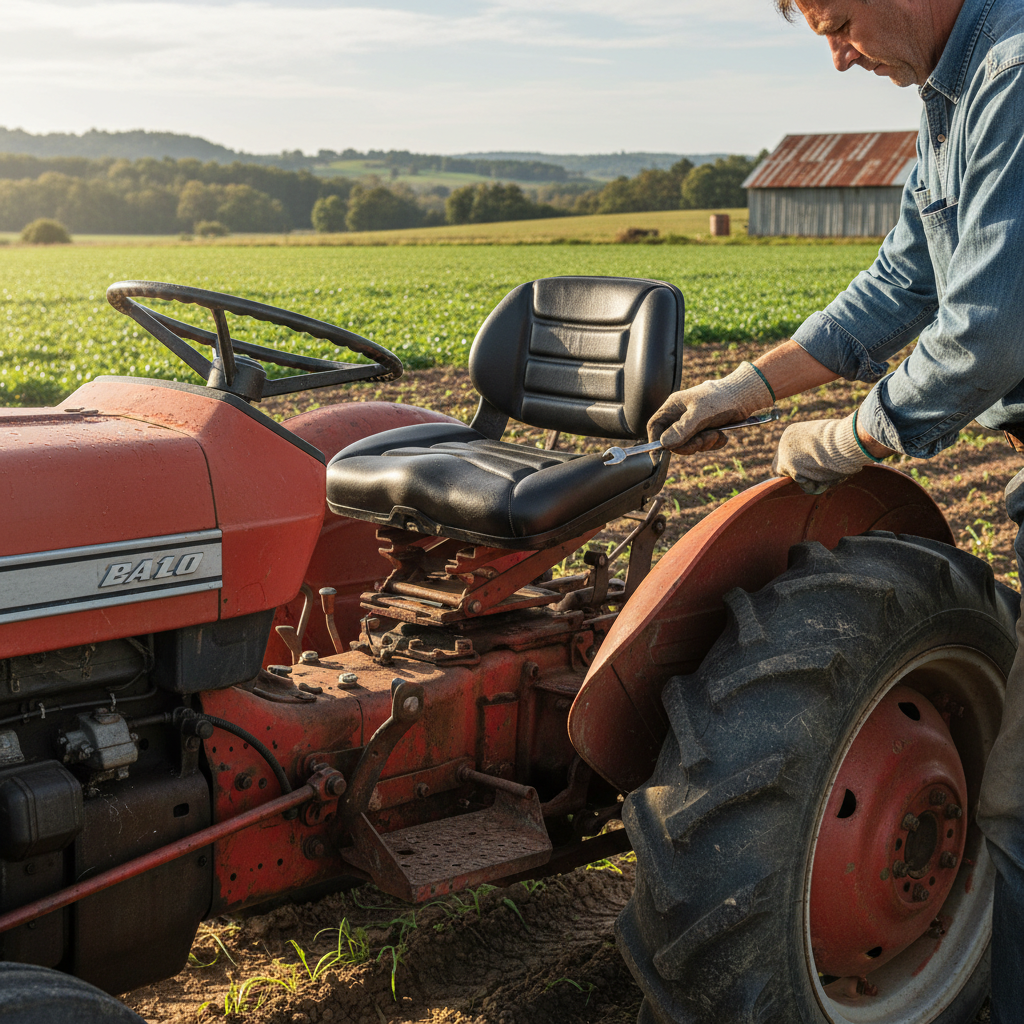
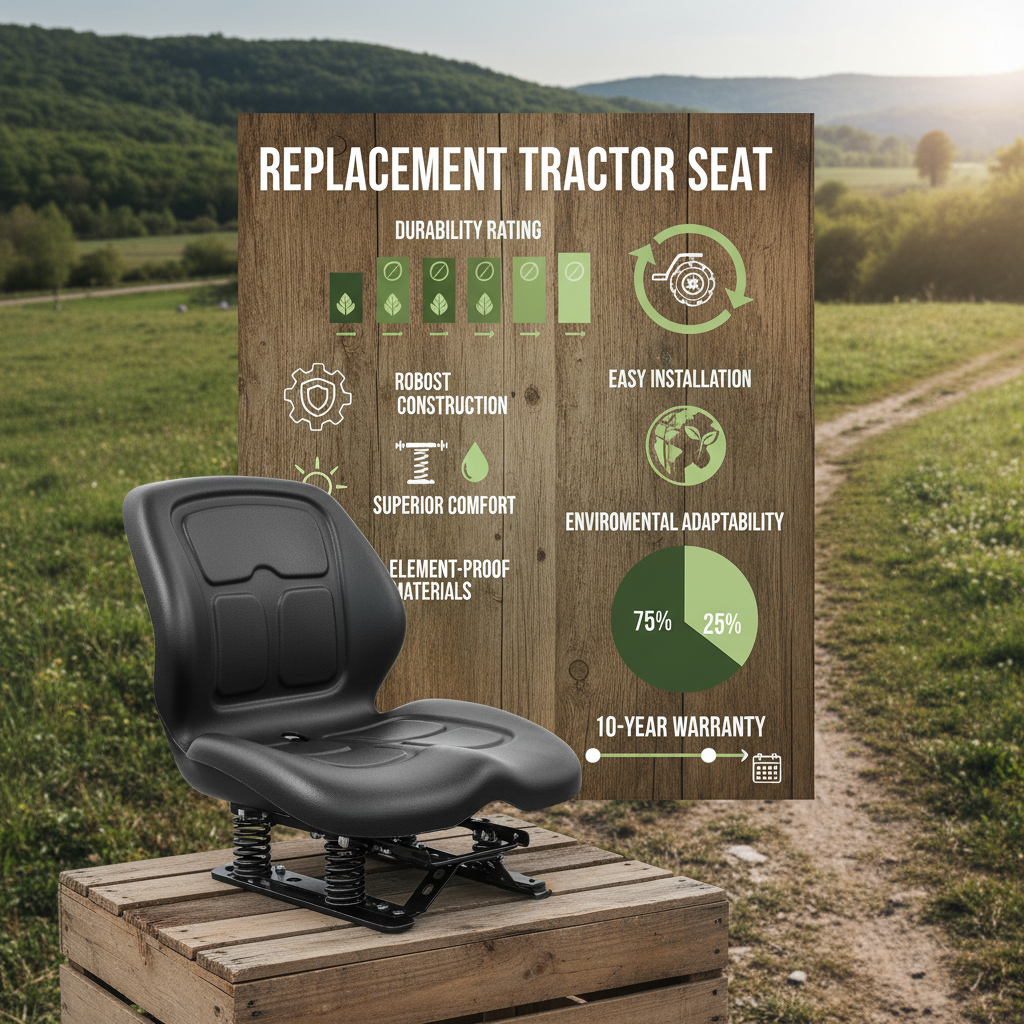
Maintaining agricultural productivity depends heavily on the condition of machinery, and often, the most overlooked component is the operator's interface. A high-quality replacement tractor seat is not merely a matter of comfort but a critical investment in operator health and machine efficiency. Over time, original seating materials degrade due to UV exposure, heavy loads, and constant vibration, leading to operator fatigue and decreased precision in the field.
Globally, the demand for durable seating solutions has surged as farming operations scale up and working hours increase. From the vast plains of North America to the intensive agricultural zones of Southeast Asia, the need for an ergonomic replacement tractor seat ensures that farmers can operate their machinery for longer periods without risking chronic back pain or musculoskeletal disorders.
Understanding the technical specifications of modern seating—such as suspension types, fabric breathability, and weight distribution—allows fleet managers to optimize their equipment's lifespan. By upgrading to a professional-grade replacement tractor seat, operators can experience a significant reduction in whole-body vibration (WBV), which is recognized by ISO standards as a primary risk factor in agricultural occupational health.
Global Industry Context of Tractor Seating
The global agricultural machinery market is currently undergoing a transition toward high-precision farming. However, as tractors become more technologically advanced, the physical interface—specifically the seat—often fails to keep pace with the increased hours of operation. Data from international occupational health organizations suggests that prolonged exposure to vibration in tractor cabs can lead to permanent spinal damage, making the installation of a high-quality replacement tractor seat a necessity rather than a luxury.
In many emerging economies, older tractor fleets are still in heavy use. These machines often lack the sophisticated air-suspension systems found in modern luxury cabs. By integrating a modern replacement tractor seat, these operators can bridge the gap between legacy hardware and modern safety standards, effectively extending the usable life of the machinery while protecting the human element of the production chain.
Defining the Modern Replacement Tractor Seat
A replacement tractor seat is a specialized component designed to replace the original equipment manufacturer (OEM) seat when it becomes worn, damaged, or obsolete. Unlike generic automotive seating, these are engineered to withstand extreme environmental stressors, including high UV radiation, moisture, dust, and the constant mechanical jarring associated with tilling and hauling.
Beyond simple cushioning, a professional replacement involves a complex assembly of a base plate, a suspension mechanism (mechanical or pneumatic), and a contoured seat pan. The goal is to create a dynamic support system that adjusts to the operator's weight and movement, ensuring that the center of gravity remains stable even when navigating uneven terrain.
In the context of modern industry, these components are essential for humanitarian and commercial agricultural goals. By reducing operator fatigue, a high-performance replacement tractor seat directly correlates to higher work efficiency and a lower rate of onsite accidents, which is critical for maintaining global food security and supply chain stability.
Core Components for Maximum Durability
The longevity of a replacement tractor seat depends primarily on the quality of its materials. High-density polyurethane foam is typically used for the core to provide consistent support without "bottoming out" over years of use. This ensures that the operator's weight is distributed evenly across the pelvic region, reducing pressure points.
Suspension systems are the heart of any replacement tractor seat. Whether utilizing a heavy-duty spring mechanism or an advanced air-ride system, the suspension must be capable of absorbing vertical shocks. This technology filters out the high-frequency vibrations that cause muscle fatigue, allowing the driver to remain alert during 12-hour shifts.
Finally, the exterior cladding—often made of reinforced vinyl or weather-resistant synthetic leather—serves as the first line of defense. A premium replacement tractor seat features double-stitched seams and water-resistant coatings to prevent moisture from seeping into the foam, which would otherwise lead to mold and structural degradation.
Performance Analysis of Seating Materials
When choosing a replacement tractor seat, the material selection directly impacts the ROI. We analyze the balance between comfort, breathability, and sheer durability. For instance, while fabric seats offer better ventilation in tropical climates, reinforced vinyl is far superior for easy cleaning in livestock-heavy environments.
The mechanical efficiency of the suspension also varies. Mechanical seats are praised for their low maintenance and reliability in remote areas, whereas air-suspension seats provide a level of customization that is unmatched for heavy-duty industrial applications.
Comparative Performance of Replacement Tractor Seat Types
Global Applications and Use Cases
In the vast agricultural belts of Brazil and the United States, the use of a professional replacement tractor seat is often tied to fleet standardization. Large-scale corporate farms replace seats on a scheduled cycle to prevent the "wear-and-tear" productivity dip, ensuring that operators maintain high accuracy during GPS-guided planting and harvesting.
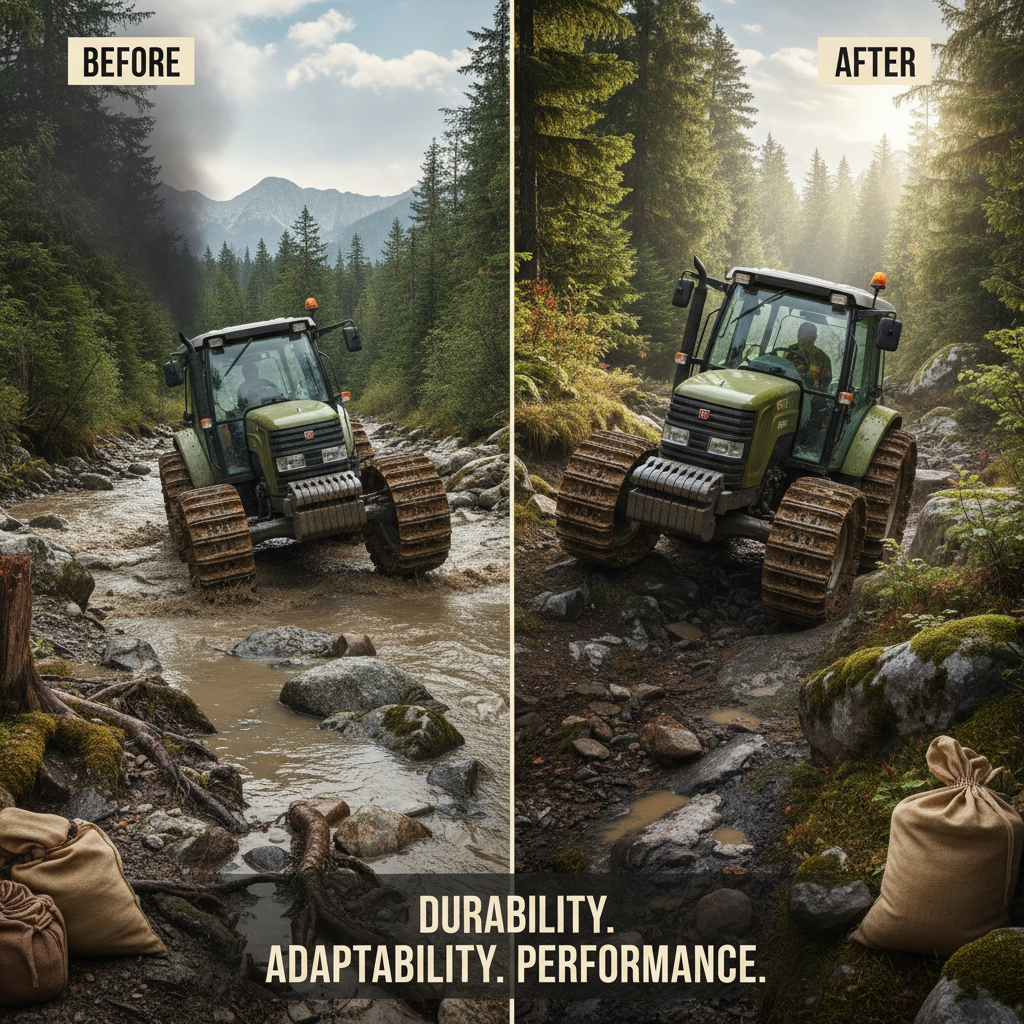
Conversely, in remote industrial zones or post-disaster relief operations where machinery is pushed to its absolute limit, the demand shifts toward "ruggedized" seats. In these scenarios, a replacement tractor seat must be easy to install with minimal tools and capable of withstanding extreme mud and debris without compromising its internal suspension.
Long-Term Value and Operator Safety
The long-term value of investing in a quality replacement tractor seat extends beyond the balance sheet. When an operator feels supported, their mental fatigue decreases, which directly reduces the likelihood of operational errors. Safety is not just about the ROPS (Roll-Over Protective Structure) but also about the stability provided by the seat during sudden jolts.
From an economic perspective, the cost of a seat replacement is negligible compared to the cost of operator downtime or medical leave due to chronic back injuries. By prioritizing ergonomic upgrades, farm owners foster a culture of care and professionalism, which increases employee retention and trust.
Furthermore, the sustainability aspect cannot be ignored. Rather than replacing an entire tractor because the cab feels "old" or "uncomfortable," upgrading to a modern replacement tractor seat allows for the continued use of viable machinery, reducing industrial waste and the carbon footprint associated with manufacturing new heavy equipment.
Future Trends in Ergonomic Tractor Seating
The future of the replacement tractor seat is moving toward "smart" integration. We are seeing the emergence of seats equipped with pressure sensors that can alert the operator when they have been in one position for too long, suggesting a posture shift to prevent numbness and fatigue.
Material science is also evolving, with the introduction of antimicrobial fabrics and temperature-regulating gels. These innovations ensure that the replacement tractor seat remains comfortable regardless of whether it is operating in the freezing winters of Canada or the humid heat of India.
As automation and autonomous tractors become more common, the role of the seat will shift from a constant support system to a monitoring station. Even in semi-autonomous modes, the operator's seat must provide maximum comfort for the "intervention" periods, ensuring the human remains an effective fail-safe for the AI.
Technical Specification Comparison for Modern Seating Solutions
| Seat Category |
Suspension Type |
Durability Score (1-10) |
Primary Use Case |
| Basic Mechanical |
Heavy-Duty Spring |
8 |
Small-scale utility farms |
| Standard Pneumatic |
Air-Cushion |
7 |
Mid-sized commercial tractors |
| Premium Ergonomic |
Dual-Stage Air Ride |
9 |
Large scale industrial fleets |
| Ruggedized Utility |
Reinforced Steel Spring |
10 |
Construction & Land clearing |
| Climate-Controlled |
Adaptive Pneumatic |
6 |
High-temp tropical regions |
| Hybrid Comfort |
Spring + Foam Layer |
8 |
Mixed-use general farming |
FAQS
You should consider a replacement when you notice visible cracks in the upholstery, the foam has permanently compressed (leaving you feeling the metal frame), or the suspension no longer bounces back after a load. If the operator reports increased lower back pain after shorter shifts, the seat's ergonomic properties have likely failed.
It depends on the environment. Mechanical seats are more durable and require almost zero maintenance, making them ideal for remote areas. Air-ride seats provide significantly better vibration dampening and adjustability, making them the superior choice for long-duration operation and operator health.
While many seats follow universal mounting patterns, it is crucial to check the base plate dimensions and the bolt hole spacing. Most professional replacements offer adjustable brackets to ensure compatibility across different brands like John Deere, Case, or Massey Ferguson.
For wet or humid climates, heavy-duty waterproof vinyl is highly recommended. It prevents moisture from penetrating the inner foam, which avoids the growth of mold and prevents the seat from becoming heavy and waterlogged, ensuring a hygienic and long-lasting experience.
While a seat doesn't change the engine, it improves the "human efficiency." A comfortable operator is more precise with steering and implement control, reduces the number of breaks needed, and maintains a higher level of focus, which indirectly leads to faster field completion and less wasted movement.
Yes. When you factor in the cost of potential medical bills for back injuries and the increase in daily productivity, the ROI on a premium ergonomic seat is very high. They are designed to last longer and provide a level of support that prevents long-term occupational disability.
Conclusion
In summary, the replacement tractor seat is a fundamental component that bridges the gap between heavy machinery power and human physical limits. By focusing on high-quality materials, advanced suspension systems, and ergonomic design, operators can significantly reduce the physical toll of agricultural work while increasing the overall operational lifespan of their equipment.
Looking forward, the integration of smart materials and adaptive supports will further revolutionize the cabin experience. We encourage fleet managers and independent farmers to view seating not as a disposable accessory, but as a critical piece of safety equipment. Investing in the right seat today is an investment in the health of the operator and the sustainability of the farm. Visit our website: www.changshuokj.com